






TypeSafe released Jev this month, and it is a different kind of model. Where a language model writes you a paragraph, Jev takes a typed question and hands back a probability for each answer. We wanted to explore the technology, so we gave it a fun job: reading the news.
The result is Outliers, a small Belvedere Labs project that watches 88 news outlets for the stories they tell most differently. Jev reads each outlet's headline and teaser with the outlet's name removed and answers the same five questions, and the stories where the newsrooms disagree most rise to the top. The feed refreshes every few minutes.
What Jev Does With a Headline
Every headline and its teaser go to Jev with the same five questions.
- How alarmed is the wording, from reassuring to sensational?
- Does the headline state a fact, attribute a claim, ask a question, or offer an opinion?
- Who, if anyone, does it hold responsible?
- Does it promise more than its teaser delivers?
- Is the language loaded?
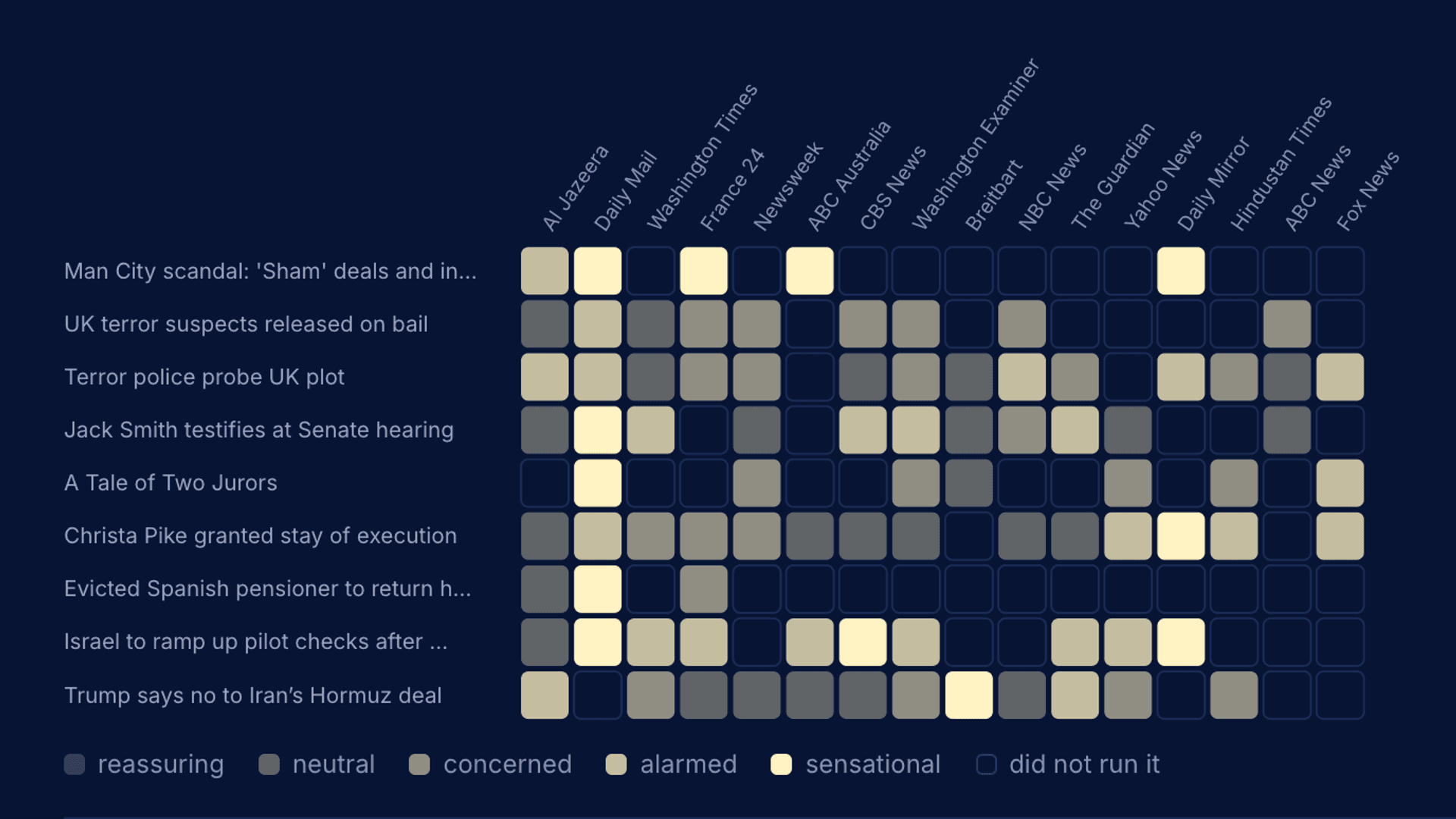
Because Jev answers with probabilities rather than prose, the rest is simple math. We add up how far apart the outlets sit on each question, give every story a divergence score, and post anything over 30. The grid at the top of this page shows the tone answers, one row per story and one column per outlet, and a brighter square is a more alarmed headline.